How to get 1200 mg of Calcium through food; and do you need to?
So your doctor told you to get 1200 mg of calcium per day from your food, but now you’re trying to calculate how in the world to do that.
Let me help.
First off, getting 1200 mg of calcium per day through food is challenging. So you’re not crazy if you feel like you’re struggling putting together a puzzle that will not fit.
So here’s an example day for you:
5 oz yogurt (250 mg)
1/2 tsp chia seeds (85 mg)
1 oz raw or dry roasted almonds (75 mg)
1 slice of cheese (150 mg)
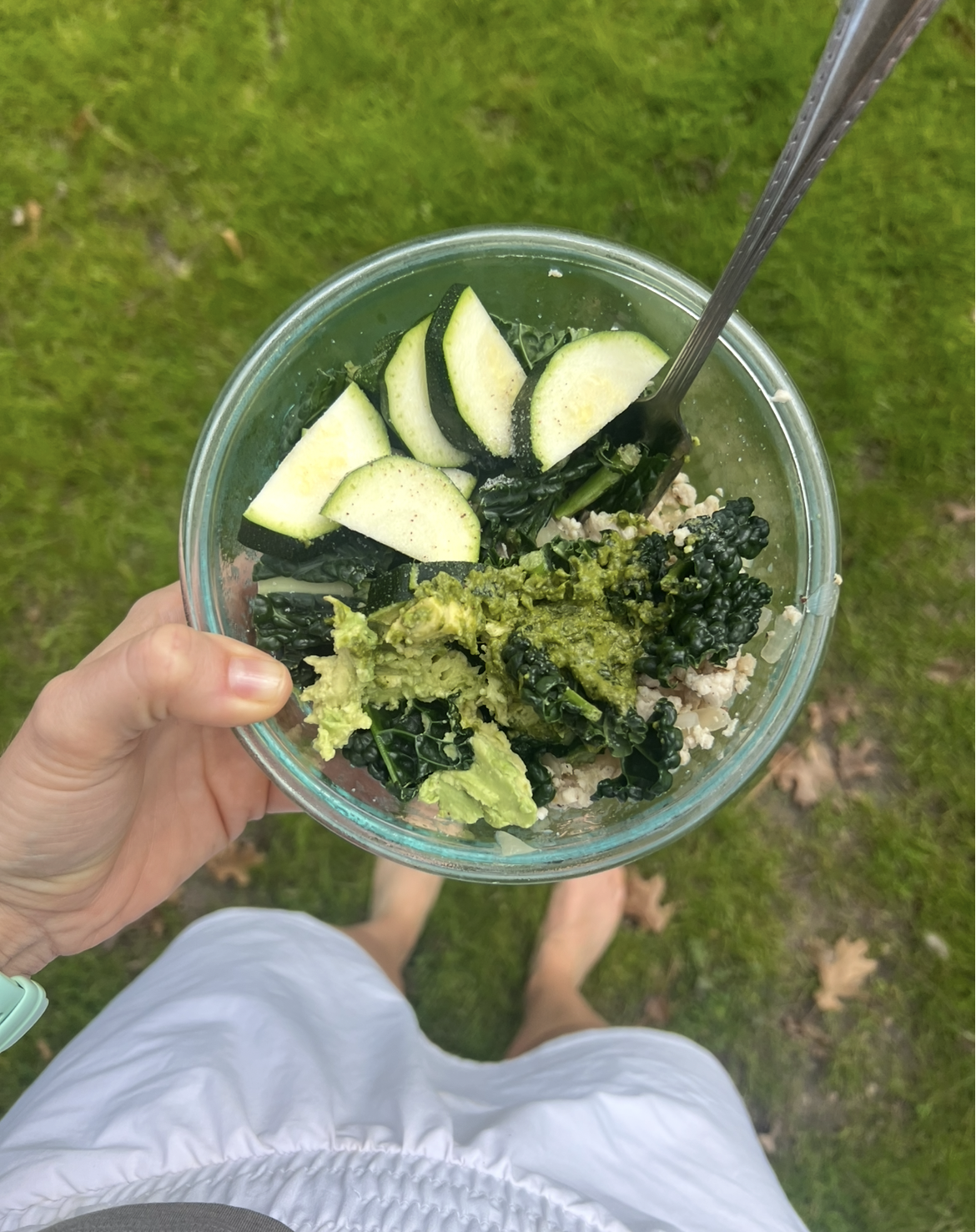
2 cups fresh kale (180 mg)
8 oz. chocolate milk (300 mg)
1 baked potato (~30 mg)
1 slice cheese (~150 mg)
1 cup cooked broccoli (62 mg)
Equaling about 1200 mg of calcium (this also assumes you tolerate dairy, which many people do not).
Counting calcium values daily seems overwhelming and challenging. But at least you can see what it would take to hit this type of recommendation.
Next time your doctor asks you to do that, you might ask, “Have you tried to do that?”
As well as, “What about the analysis of research studies that prove that getting 1000-1200 mg of calcium per day doesn’t decrease the risk for bone fractures in individuals over the age of 50?”
Or, “What about the analysis of research studies done on women that show increasing dietary calcium only has a modest effect on bone density?”
What these research studies did show, however, was that getting 800 mg of calcium per day through diet had a minimal impact on bone density.
So what gives?
How in the world are you supposed to build strong bones, reverse osteoporosis, and prevent bone loss?
You must realize that calcium is one part of a much larger picture.
Where do these recommendations come from?
These recommendations stem from a study done on French women that showed increasing calcium intake to 1200 mg per day had a positive impact on bone health alongside increasing Vitamin D intake. However, the problem with this study is that these women were on average 84 years old and lived in an assisted living facility. Their baseline health was much lower than women who are many years younger (and more active) who receive this advice.
Studies that should be guiding your calcium intake:
Research analysis can be very helpful because they look at multiple studies.
🌟 One analysis study found no correlation to an increase in calcium intake and a decrease in fracture risk:
https://www.bmj.com/content/351/bmj.h4580
🌟 Another analysis looked at over 59 controlled clinical studies and found that getting at least 800 mg of calcium in your diet per day is enough to support healthy bones:
https://www.bmj.com/content/351/bmj.h4183
However, the problem is that these research studies kept finding calcium had a minimal impact on your bone density.
So what that means for you is if you are trying to increase your bone density it is so much more than getting enough calcium per day.
You need a healthy nutrient dense diet to prevent bone loss, absolutely. But don't let that cause you neglect what truly matters for bone health as we age.
Here are 4 things you need to do:
1. Decrease insulin resistance. Insulin resistance drives bone loss. (There’s a reason that insulin resistance increases with menopause and these are the women who struggle with bone loss most.)
2. Realize that there are many nutrients involved in bone health: boron, magnesium, Vitamin K, Vitamin D, and yes calcium, all play a huge role.
3. You have to eat enough calories. If you are losing muscle you will be losing bone as you age as well. And low calorie diets ensure loss of both as you age. (I speak more about this in this youtube video how to grow muscle here.)
4. You must be active. A muscle building protocol alongside something that keeps your cardiovascular system intake because bone is built through building torque and pressure (why jumping workouts like this are effective) alongside muscle growth.
Do you need help building strong bones? Click here to apply to join Wellness in Bloom today where you receive a low stress, personalized plan centered around nutrition, movement, and lifestyle to help you do so.